Kitting
Kitting Software: Tracking Kit Stock
- Category
- Kitting
- Published
- 12 Oct 2026
- Last verified
- 12 Oct 2026
- Reading time
- 5 min
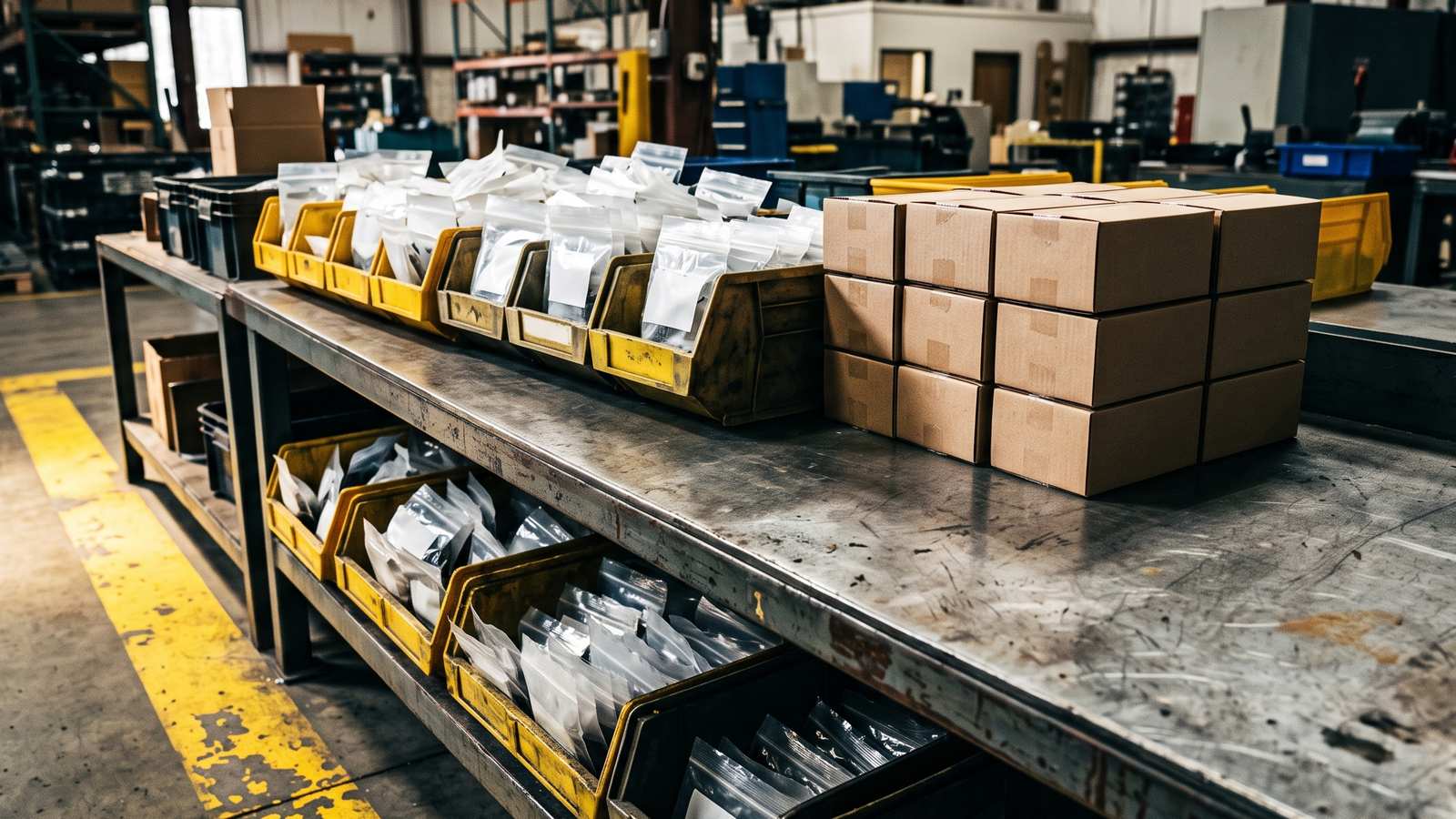
Kitting means gathering several items and shipping or storing them as one unit. A starter box, a gift set, a repair pack, a subscription box: all kits. The work is simple to describe and surprisingly easy to get wrong in a system.
The problem is stock. If you sell a kit of three things, which number goes down when it ships? The kit, the three parts, or both? Software that gets this wrong leaves you overselling parts or hiding stock you actually have. This page explains the terms, how a system should track kits, and what to check.
Kit, bundle, assembly: three words, three jobs
People use these words loosely. A system needs them kept apart.
- Kit. A set of separate items packed together. The parts stay recognizable and could be taken back out. A first aid pack is a kit.
- Bundle. A selling idea: several products offered together at one price. They may be picked separately and shipped in one box, with no extra handling at all.
- Assembly. Parts are combined into something new, which is then a product in its own right. Once built, you do not easily take it apart.
The line blurs, but the useful question is: does anyone do extra work to put it together? If the answer is no, it is a bundle. If a person gathers and packs in advance, it is a kit. If parts are fastened, wired or mixed, it is an assembly, and may belong in production tracking rather than a warehouse module.
Bill of materials in the WMS
A kit is defined by a list of what is in it, often called a bill of materials, or BOM. For a kit, it is simple:
| Kit item | Component | Quantity |
|---|---|---|
| Starter box | Notebook | 1 |
| Starter box | Pen | 2 |
| Starter box | Sticker sheet | 1 |
The system uses this list to answer three questions:
- How many kits can I make now? The smallest ratio of available parts to quantity needed.
- What do I pick? The components, in the right amounts.
- What changed in stock? Components go down. If kits are built ahead, the kit count goes up.
Look at whether components can be shared between kits. A pen used in four different kits is one pool of stock, and the system must treat it that way.
Pre-kitting or kit on order
There are two ways to run a kit.
Pre-kitting
You build kits in advance and store them as finished units. They pick like any other item.
Good when: the same kit ships often, the build takes time, or you have quiet periods to fill.
Watch out for: parts tied up in finished kits you may not sell, and kits that contain an item with an expiry date.
Kit on order
You hold components and assemble when an order arrives. Picking pulls each part and packing combines them.
Good when: you offer many variations, demand is hard to predict, or you want to keep stock flexible.
Watch out for: slower packing, and the risk of a missing component being discovered at the bench.
Many operations use both: pre-kit the popular sets and build the rest to order. A system should support that without two separate processes.
Component shortages
Shortages are where kitting hurts. One missing item blocks the whole kit.
Check how the system behaves when:
- A component is out of stock. Does it stop the kit order, ship part of it, or warn at the time of sale?
- A component is substituted. Can you swap a similar item, record it, and keep the kit identity?
- A component arrives late. Does it show the kit as blocked, and which orders wait on it?
- A component is damaged during building. Does the system let you scrap one part without destroying the finished kit record?
A plain report of "kits you cannot build and the part holding them up" is worth more than any dashboard.
Breaking kits apart
Sometimes you need to reverse the process: a slow kit gets broken back into parts, or a customer returns one. A system should let you disassemble, restore the components, and keep a record. If it cannot, you will end up with phantom stock.
An example (hypothetical)
A small candle maker sells a gift set: two candles, one matchbox and a card. She pre-kits fifty sets before a holiday and keeps ten spare candles loose. Her old spreadsheet counts candles and gift sets as unrelated rows, so every build requires three edits and one is always missed. After a month the candle count is wrong and she cannot tell why.
With a kit definition in a system, building ten sets deducts twenty candles, ten matchboxes and ten cards, and adds ten sets. If a customer sends one back, she can break the set or return it whole. The accounting follows the work.
This is an invented business, but the failure it shows, mismatched counts between parts and sets, is the usual reason people look for kitting features.
Where kitting touches the rest of the system
- Receiving: components arrive as separate items and need their own locations.
- Picking: kit-on-order needs a pick list that shows each part and where to find it.
- Packing: the screen should list what goes in the box and confirm each one.
- Orders: the kit may be sold as one item, but the pick sees the parts.
- Reports: you want to see both kit count and component levels at once.
Questions for vendors
- How do I define a kit, and can the same component sit in several kits?
- Can I build kits ahead of time and to order?
- What happens to stock when I sell, build, break or return a kit?
- How does the system show shortages and which orders they block?
- Can I substitute a component and record the substitution?
- Does packing confirm each component by scan?
- Can the kit carry lot or expiry data from its parts?
- Can I export the kit list and component levels?
Ask the vendor to run one of your real kits through a build, a sale and a return during the demo.
One more option
If your kits are unusual, such as variable contents or customer-chosen parts, a standard module may not fit. Cargohold, which we make, is a one-time custom build, no per-seat, per-truck or per-client fees. It is only one route, so bring the same kit list to every option you consider.
Next step
Write down your three most common kits, their parts and their quantities. That small list is the best test of any kitting feature you meet.
Questions people ask
What is kitting in a warehouse?
Gathering several items and shipping or storing them as one unit, such as a starter box, a gift set or a repair pack.
What is the difference between a kit, a bundle and an assembly?
A kit is a set of separate items packed together, a bundle is a selling idea where items may ship in one box with no extra handling, and an assembly combines parts into a new product that is not easily taken apart.
What is a bill of materials in kitting?
A list of the components in a kit and the quantity of each. The system uses it to work out how many kits you can make, what to pick and which stock counts change.
What is the difference between pre-kitting and kit on order?
Pre-kitting builds kits in advance and stores them as finished units. Kit on order holds components and assembles when an order arrives. Many operations use both.
What should happen when a kit component is out of stock?
Check whether the system stops the kit order, ships part of it or warns at the time of sale, and whether it can show which kits are blocked and by which part.
Why should kitting software let me break kits apart?
So a slow kit or a returned one can be taken back into components with a record. Without it you end up with phantom stock.
Sources
- No third-party facts, prices or vendor claims are used on this page. The example is hypothetical.