By warehouse type
WMS for apparel: what matters for sizes, colours and returns
- Category
- By warehouse type
- Published
- 15 Oct 2026
- Last verified
- 15 Oct 2026
- Reading time
- 4 min
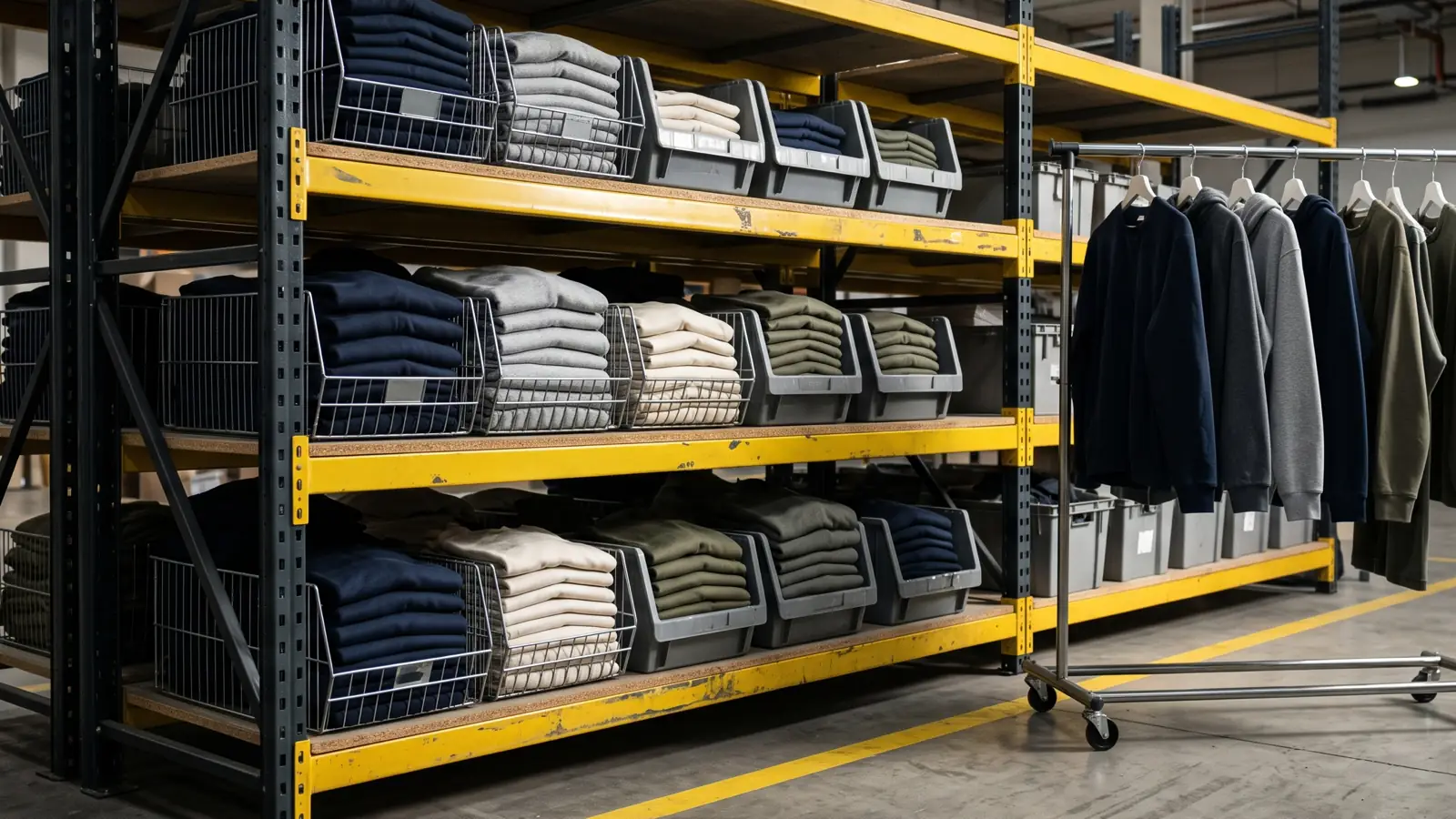
A cardboard box of bolts and a rack of jackets are both inventory, but they behave very differently. One item might have three sizes. One jacket has five colours, seven sizes and a return rate that looks nothing like the bolts. If you run an apparel warehouse, a general WMS can work, but only if it handles a few things well. This page covers those things.
Style, colour and size
In apparel, the thing a customer wants is a style, and the thing you pick is a specific colour and size of that style. That gives you a matrix. Ten styles, six colours and eight sizes make 480 stock lines before you have counted a single unit.
A WMS should treat these as variants of one style, not 480 unrelated items. In practice that means:
- One barcode per variant, so the picker scans exactly the size on the label
- Stock counts per variant, with roll-ups by style or colour
- Item data you can load in bulk from a sheet, because nobody types 480 lines by hand
- Reports that show a style as a whole and also let you see that size M is gone while XL sits untouched
If a vendor cannot show a style with variants on screen, ask how the same job would be set up in their product.
Pick faces and bulk storage
Apparel has a clear split between what is picked and what is stored. A small pick face near the packing area holds the sizes that sell quickly. The rest of the stock sits in bulk locations, on racking or in cartons, and moves forward when the face runs low.
This makes replenishment central. A good WMS tells someone to move a carton to the pick face before the picker finds it empty. It should also let you set a different pick face size for different variants, since one size of one colour may sell ten times as much as another. The rules behind choosing where items sit are covered in slotting software.
Apparel also has storage that is not rack at all: hanging rails for garments that cannot be folded. Check that the system can describe a rail location and a shelf location, and that pick paths cope with both.
Returns
Returns are where apparel differs most. Fit, colour and change-of-mind all drive returns, and each one has to be handled. A return needs to be checked, graded and sent somewhere:
- Good as new, back to the pick face
- Needs pressing, cleaning or a new tag, then back to stock
- Damaged, to repair, to a clearance bin or to write-off
A WMS should let the receiver scan the item, choose a grade, and have the stock land in the right status. If returned items sit unlogged in a corner, you lose sellable stock and your counts drift. A returns step that takes minutes per item will grow into a backlog in peak weeks.
Look for these specifics: linking the return to the original order, reason codes, a quality status that blocks stock from being picked until it is regraded, and a clear route for each grade.
Seasonal peaks
Apparel sales come in waves: a new season, a sale, a holiday weekend. During a peak the warehouse may handle several times its normal volume, with temporary staff who do not know the building.
That puts pressure on the simple things. Labels must be clear. Handheld screens must be easy to follow. Location names must be consistent. Ask for a demo with a new user who has never seen the system, and watch how long it takes for them to do a pick correctly. How picking is released to the floor in busy periods is covered in wave picking explained.
Also ask how the system behaves with many users at once, and whether you can add handhelds without a long setup.
A short example (hypothetical)
A small online clothing brand ships from a rented unit. It has 40 styles, each in up to six sizes and four colours, and sells through its own website and a marketplace. Around one in four orders is a return in busy weeks.
Their problem is not picking. It is that returned stock goes into a box on Friday and is not back on sale until Wednesday, while the website shows it as out of stock. They want a WMS where the receiver scans each return, chooses a grade, and the good stock appears as available in minutes. They also want the same stock count to feed both sales channels, so they do not sell the last medium twice.
That is the shape of the question to bring to a vendor: not "do you support apparel?" but "show me a return scanned, graded and back on sale."
Questions to ask vendors
- How do you set up a style with colour and size variants?
- Can I import a full catalogue from a spreadsheet?
- Is there one barcode per variant, and can the system print labels?
- How does replenishment from bulk to the pick face work?
- Can you handle hanging rails as well as shelves and racking?
- Show me a return scanned, graded and put back on sale.
- Can stock in a quality status be blocked from picking?
- How is stock shared across more than one sales channel?
- How easy is it for a new temporary worker to follow the handheld?
Where to start
Count your variants, not just your styles. Then take a week of returns and write down what happens to each one and how long it takes. Those two numbers, variant count and return handling time, will tell you how much a WMS has to carry for you.
Questions people ask
What does a WMS for apparel need that a general WMS does not?
A way to handle one style in many colours and sizes without creating hundreds of unrelated items, plus a returns process that can regrade stock and put it back on sale quickly.
How should apparel SKUs be set up in a WMS?
As a style with colour and size variants, each with its own barcode and stock count. Reports should roll up to the style and also drill down to a single size.
Why are returns such a big part of apparel warehousing?
Sizing and fit mean many items come back. Each return has to be checked, regraded and either restocked, repaired or written off, and slow handling leaves sellable stock sitting in a box.
Do apparel warehouses need separate pick faces and bulk storage?
Usually yes. Fast sizes sit in a small pick face for quick picking, while the rest of the stock sits in bulk locations and moves forward when the face runs low.
Can a small apparel brand run without a WMS?
For a while, with a clear barcode scheme and a spreadsheet. Trouble starts when size variants, returns and several sales channels multiply the number of stock lines.
Sources
- No third-party facts, prices or vendor claims are used on this page. The example is hypothetical.